Oxidized Headlights in Tucson
Yellow, chalky, rough, or cloudy plastic is often exterior oxidation. Text dry photos and get a practical next step.
Oxidized headlights are often good restoration candidates when the lens is intact and the damage is on the outside. Moisture, cracks, broken assemblies, or deep internal damage can point away from restoration.
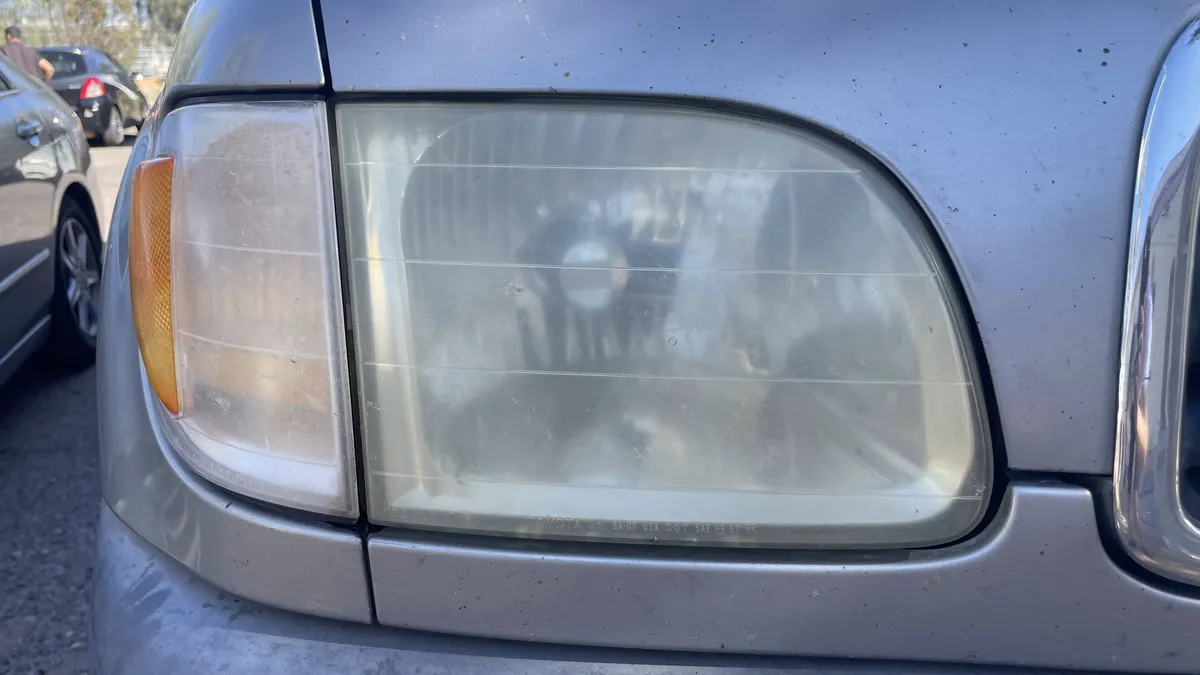
Visual signs of oxidation
- Yellow film across the lens
- Cloudy surface that does not wash off
- Rough or chalky plastic
- Uneven haze from top edge sun exposure
- Lens looks clearer when wet, then cloudy when dry
When restoration is a good fit
Restoration is worth reviewing when the headlight is intact and the issue is exterior UV damage, yellowing, chalky haze, or a failing outer coating.
Photos are useful because one headlight can be worse than the other, especially on vehicles parked in the same direction every day.
When replacement may be better
Replacement or repair review may be smarter when the lens is cracked, wet inside, deeply crazed, broken, or showing internal reflector or lighting problems.
Exterior restoration cannot fix those internal or structural issues.
Why Tucson speeds up oxidation
Strong UV, high heat, dust, outdoor parking, and monsoon residue all work against plastic lenses in Southern Arizona.
Once the protective surface fails, the plastic underneath can turn yellow or chalky faster.
Common questions
How do I know headlights are oxidized?
Oxidized lenses often look yellow, chalky, rough, or dull while dry. If the lens gets clearer when wet and cloudy again when dry, the damage is likely on the exterior surface.
What photos show oxidation clearly?
Use dry daylight close-ups and angled photos of both headlights. The angle helps show chalky texture, top-edge yellowing, peeling coating, and rough surface damage.
Does UV protection stop oxidation forever?
No. UV protection helps slow future oxidation after correction, but Tucson sun, heat, parking, washing, and lens age still matter.
When is oxidation not the main issue?
If there are droplets inside, cracks, broken tabs, internal haze, or lighting problems, the headlight may need repair or replacement review instead of only exterior restoration.
Related pages
Not sure if it is oxidation or moisture?
Text photos first. Dry close-ups and angled photos usually show whether the haze is on the outside lens or inside the assembly.
- Send dry daylight photos of both headlights.
- Add one front photo of the vehicle.
- Include year, make, model, and your general Tucson-area location.