Why One Headlight Gets Cloudy Faster Than the Other in Tucson
Learn why one headlight may turn yellow or cloudy before the other in Tucson and when mobile restoration is worth it.
Published 2026-06-07. Modified 2026-06-07. Publisher: Alex Martinez.
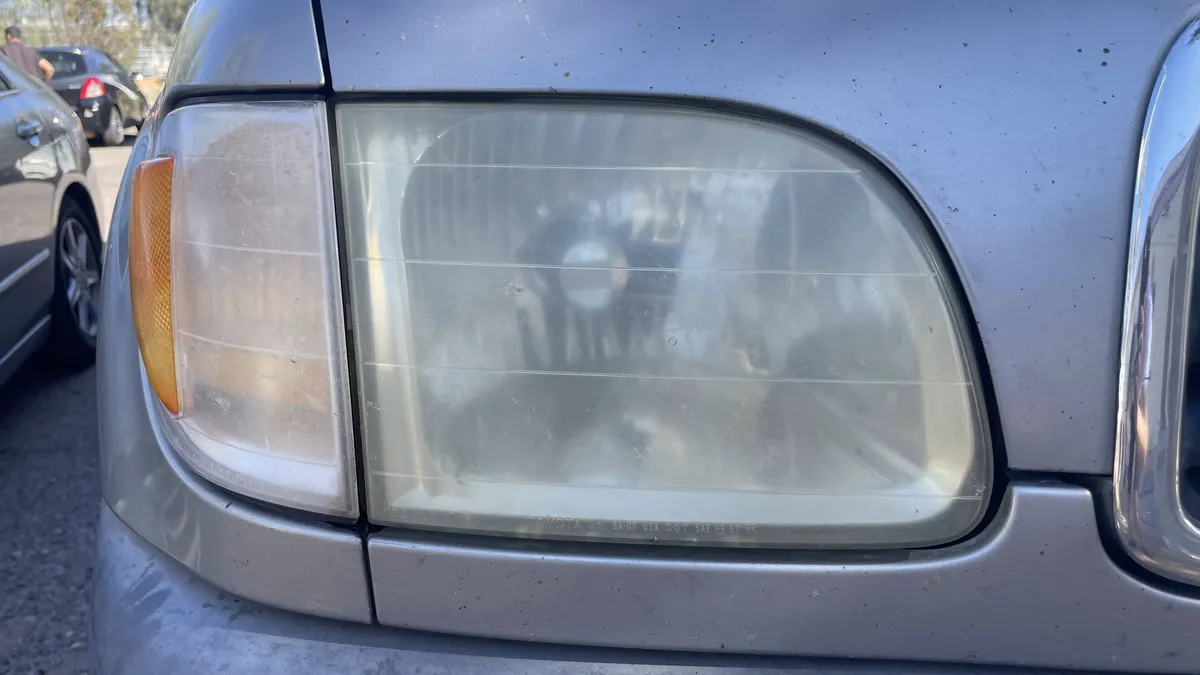
Why uneven headlight aging happens
If one of your headlights looks noticeably worse than the other, you are not imagining it. A lot of Tucson drivers assume both lenses should age at the same speed, but real-world wear usually is not that symmetrical.
One side of the vehicle may get more direct sun depending on how you park at home, at work, or in an apartment lot. One side may also take more abuse from traffic, curbside exposure, splash, hard water, sprinklers, or washing habits. The result is common: one lens starts turning yellow, chalky, or cloudy before the other one catches up.
That matters because uneven headlight clarity can make the front of the vehicle look older, reduce confidence in the car's condition, and leave you wondering whether the problem is temporary dirt or real oxidation.
The biggest reason is not usually a bad headlight. It is uneven exposure.
In Tucson, parking direction matters. If your vehicle sits in the same place day after day, one side often gets more direct sunlight and heat for longer periods. Over time, that repeated exposure wears down the outer protective layer faster on one lens.
The same thing can happen when one side faces open sun while the other side is partially shaded by a wall, carport support, tree, building, or another parked vehicle.
Parking direction can age one lens faster
Think about where your car sits most often.
If you park in a driveway, apartment lot, school lot, workplace lot, or street space with the front of the car facing the same direction every day, one headlight may absorb more afternoon sun than the other.
That repeated heat and UV exposure can slowly break down the lens coating. Once the coating weakens, the plastic underneath starts oxidizing. That is when the lens begins to look yellow, milky, or rough.
This is one reason Tucson vehicles often show headlight damage that is not perfectly even from side to side.
For more prevention context, review the guide to parking habits that help protect headlights from Arizona sun.
Washing and water spots can also affect one side
Sun is not the only factor.
Sprinklers, hard water, road film, bug residue, and car wash chemicals can affect one headlight more than the other depending on where the car is parked and how it is cleaned.
For example, a vehicle parked near sprinklers may get repeated water spots on one front corner. If those minerals dry in the sun, they can make an already weakened surface look worse.
Automatic brush washes can also create uneven wear if one side of the lens is already more vulnerable.
How to tell if it is oxidation or something else
Start with a simple visual check in daylight.
If the worse-looking headlight feels rough, chalky, or slightly dry on the outside, that usually points to surface oxidation. If it looks yellow at the top edge, that is another common sign.
If both headlights look fairly clear from a distance but one side goes hazy in direct sunlight, that can also be early surface wear.
On the other hand, if the lens feels smooth on the outside but the haze appears deeper inside the housing, you may be dealing with internal damage, trapped moisture, or reflector issues instead.
For a deeper explanation, see the page on oxidized headlights in Tucson. You can also compare the broader causes in the guide to why headlights get foggy in Tucson.
Should you restore one headlight or both?
In most cases, both headlights should at least be evaluated together.
Even if one side looks worse, the other side may already be starting to break down. Restoring only the worst side can leave a noticeable mismatch if the clearer side has already started to yellow or lose surface clarity.
That does not mean both headlights always need the exact same level of correction. But from a visual and practical standpoint, it usually makes sense to review both lenses at the same time.
If mobile service is a good fit, a photo review can help determine whether mobile headlight restoration in Tucson makes sense for one or both sides. If you want the main service overview first, start with headlight restoration in Tucson.
When uneven cloudiness points to replacement instead
Uneven aging by itself does not mean replacement. The more important question is what kind of damage you are seeing.
Restoration is usually worth considering if the issue is surface oxidation, yellowing, dullness, or light cloudiness.
Replacement or more extensive repair may be more realistic if one headlight has deep cracks, internal damage, water intrusion, broken tabs, severe crazing, or a failing internal component.
If only one headlight has moisture inside, for example, restoring the outside lens may improve appearance but will not fix the leak.
Why acting early can help
If one side already looks worse, it may be a good time to act before both headlights become heavily oxidized.
Early oxidation is often easier to correct than years of deep yellowing and surface failure. It also gives you a chance to protect both lenses before the second side gets worse.
Waiting until both headlights are severely cloudy can make the restoration more aggressive and may limit the final clarity.
What photos to send
For the most useful review, send photos of both headlights, not just the worse one.
Include:
1. One full front photo of the vehicle
2. One close-up of each headlight
3. One side-angle photo of the worse lens
4. One photo in direct daylight
5. One photo showing any cracks or moisture
Dry photos are best. Wet lenses can temporarily hide oxidation and make the condition look better than it really is.
Conclusion
One cloudy headlight and one clearer headlight is a very normal Tucson pattern. It usually tells you the lenses have not aged under identical conditions, not that one side is randomly failing.
If the damage is still mostly on the outside, restoration may improve clarity without replacing the entire assembly. The best next step is to send photos of both headlights and compare them side by side.
Send clear photos of both headlights for a Tucson mobile headlight restoration quote and honest condition review.
Ready to see if your headlights can be restored?
Send clear photos of both headlights and include your vehicle details. Tucson Headlight Restoration will review the lens condition before scheduling mobile service.

Common questions
Is it normal for one headlight to yellow before the other?
Yes. Uneven parking direction, sun exposure, water spots, and day-to-day wear can cause one lens to age faster.
Should I restore only the worse headlight?
Usually both should be reviewed together so you do not end up with a noticeable mismatch in clarity.
Does one cloudy headlight mean the assembly is bad?
Not always. Many cases are just outside oxidation, which may still be a restoration candidate.
Can photos show whether the damage is inside or outside?
Often, yes. Clear daylight photos from the front and close up can help show whether the haze looks surface-level or deeper inside.
Why is the top of one headlight worse?
The upper area of the lens often receives more direct sun and heat, so it may oxidize before the lower portion.
Get a quote in 30 seconds
Send clear photos of both headlights before buying a kit or replacing the assemblies. Tucson Headlight Restoration will review the lens condition before scheduling mobile service.
- Take two clear photos of your headlights.
- Text them to 520-254-7620.
- Include year, make, model, and service area.
- Get a clear recommendation before buying a kit or replacing the headlights.