Why One Headlight Gets Cloudy Faster Than the Other in Tucson
One headlight aging faster can point to parking exposure, moisture, repair history, or a mismatched assembly.
Published 2026-06-07. Modified 2026-06-21. Reading time: 2 min read. Publisher: Tucson Headlight Restoration.
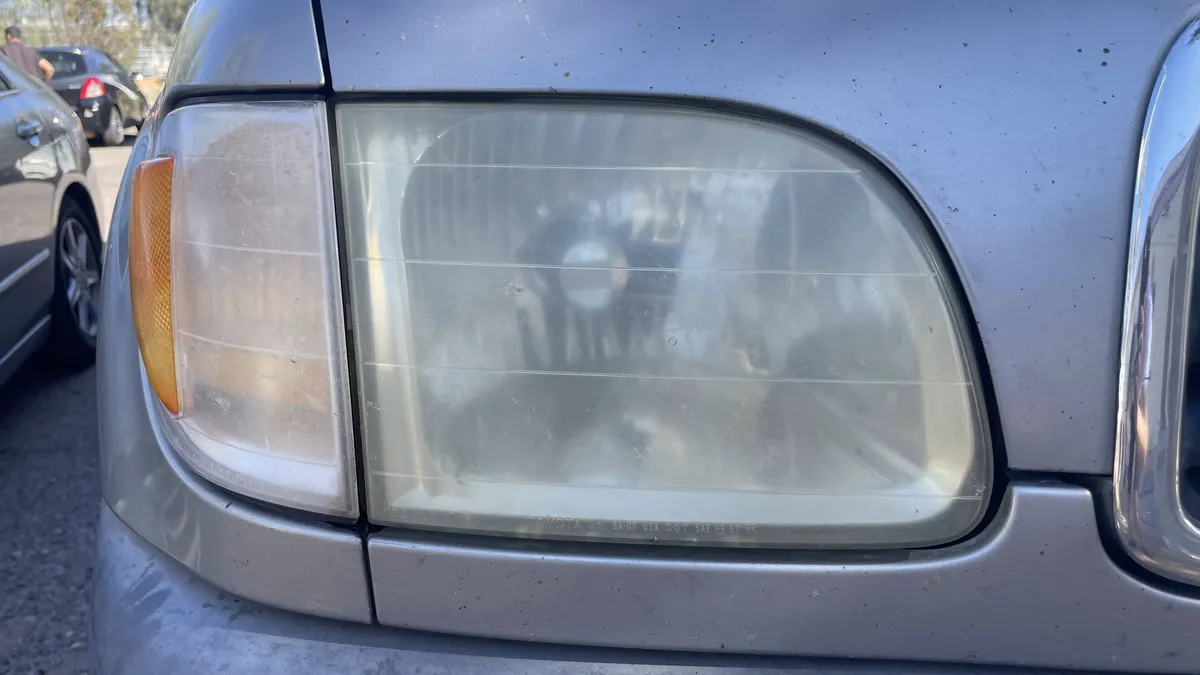
Uneven cloudiness is a clue
When one headlight gets cloudy faster, do not assume only that side matters. The pair should be compared because the clearer side may already be starting the same cycle.
Uneven wear can come from parking direction, sprinklers, shade, past replacement, collision repair, or moisture.
Look for mismatch signs
A newer assembly on one side, a failed seal, or haze behind the lens can make the pair age differently. Exterior oxidation usually shows on the outside surface; moisture and internal haze sit behind the plastic.
Restoring only the worse side can also make the other side look older by comparison.
Compare both sides before choosing one-side service
Photograph both headlights in the same light. A one-side problem is often easier to understand when the clearer side is visible for comparison.
One-sided next step
Send both headlights in the same lighting, then add close-ups of the worse side and any water, cracks, or replacement clues.
The answer may be restore both, restore one with expectations, inspect for moisture, or review replacement for one assembly.
Common questions
Why does only one headlight turn yellow first?
Uneven sun exposure, parking direction, sprinklers, previous replacement, or moisture can make one lens age faster than the other.
Should I restore only the cloudy headlight?
Maybe, but both headlights should be reviewed first because restoring one side can create a mismatch or miss early damage on the other side.
Can one cloudy headlight mean moisture inside?
Yes. Droplets, fog behind the lens, or cloudiness that appears internal should be checked before exterior restoration.
Text your location and photos of both headlights
For mobile service, send dry photos, the vehicle details, and the general location where the vehicle would be parked.
- Send dry photos of both headlights.
- Add year, make, model, and general location.
- Mention driveway, apartment, workplace, shade, or access limits.