Headlight Crazing vs Oxidation in Arizona
Learn the difference between headlight crazing and oxidation in Arizona so you know when restoration may help and when replacement is more realistic.
Published 2026-06-07. Modified 2026-06-07. Publisher: Alex Martinez.
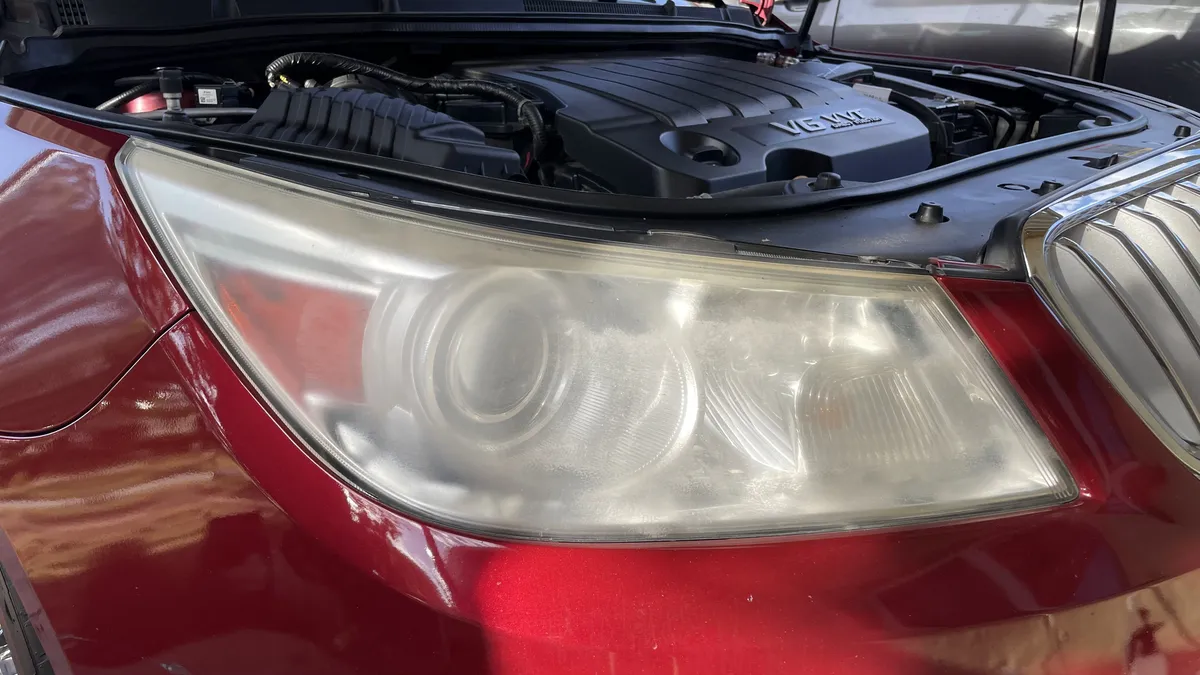
What oxidation usually looks like
A lot of people use the word oxidized for every bad-looking headlight, but not all damaged lenses are dealing with the same kind of failure.
Some headlights are simply oxidized on the outer surface. Others develop a more advanced pattern of fine cracking or stress marks that people often describe as spiderwebbing, checking, or lasting cloudiness. That deeper condition is commonly called crazing.
The difference matters because oxidation and crazing do not behave the same way, and they do not respond the same way to restoration.
Oxidation usually shows up as yellowing, milkiness, dullness, or a chalky film on the outer surface of the lens.
It often starts gradually. The lens loses its crisp shine, then turns hazy in sunlight, then starts looking older even when the rest of the vehicle still looks decent.
Surface oxidation is the kind of damage most people think of when they picture foggy headlights. In many cases, it is also the kind of damage that gives restoration its best chance to help.
If your headlights are mostly yellow, cloudy, or rough on the outside, start by reviewing the page on oxidized headlights in Tucson.
What crazing usually looks like
Crazing is different.
Instead of a more uniform outer haze, crazing often looks like fine internal or through-surface cracking. The lens may appear dry, fractured, or spiderwebbed. In direct light, it can look deeper than a normal cloudy film.
A crazed lens may still improve somewhat with correction, but it usually signals that the plastic has aged beyond simple outer oxidation.
That is why a lens can look foggy to the owner but still behave very differently in terms of what is realistically recoverable.
Why Arizona can make both problems worse
Arizona is hard on plastic headlight lenses. Tucson sun, heat, outdoor parking, dry dust, monsoon residue, and frequent washing all put stress on the lens surface.
Oxidation often begins when the factory protective coating breaks down. Once that layer weakens, UV exposure and heat continue to age the plastic.
Crazing can appear when the material has deeper stress, age, or cracking patterns. It may be made more noticeable by sun exposure, heat cycles, old coatings, previous aggressive restoration, or long-term lens fatigue.
For a broader local overview of how this starts, see why headlights get foggy in Tucson.
Why this distinction matters
If you treat crazing like ordinary oxidation, expectations get set too high.
A normal oxidized lens may respond well when the failed outer layer is corrected and the surface is finished evenly. A crazed lens may still look better after restoration, but it may not return to the same level of clarity because the damage is not limited to a removable outer film.
This is exactly why honest pre-qualification is so important. Not every bad headlight needs replacement, but not every bad headlight should be sold as a full recovery either.
How Tucson drivers can spot the difference
A quick daylight inspection can help.
Oxidation usually looks more like surface haze, yellowing, or chalkiness. Crazing usually looks deeper, more fractured, and harder to fully clear.
If you wipe the headlight and it still looks like the fog is inside the plastic or spread through the lens in tiny crack-like patterns, that is a sign to be more cautious.
Photos can help, but close-up angles matter. A straight-on shot plus a side-angle shot in direct light is usually far better than one distant photo.
The touch test
Gently touch the outside of the lens.
If it feels rough, dry, chalky, or oxidized on the surface, the damage may be external. That is usually more restoration-friendly.
If the surface feels relatively smooth but the lens still looks fractured or cloudy deeper inside, crazing or internal damage may be involved.
Do not scrape the lens with a fingernail or sharp tool. The goal is only to identify texture, not make the damage worse.
When restoration still makes sense
Restoration can still make sense when the lens is mostly dealing with outer haze, yellowing, dullness, or failed surface coating.
It may also make sense when a lens has mixed damage and the owner understands that the goal is meaningful improvement, not a like-new promise.
That is an important distinction for honest local service pages in Tucson. Clear, realistic framing builds more trust than selling every lens as a miracle before-and-after.
If the damage looks mostly external, headlight restoration in Tucson may be worth reviewing before assuming replacement is the only path.
When replacement becomes more realistic
Replacement becomes more realistic when the lens shows heavy crazing throughout the plastic, significant internal damage, moisture problems, broken tabs, failed seals, or damaged internal components.
Replacement may also be the better choice when the driver wants a result that the current lens condition probably cannot deliver.
For a broader decision process, review the headlight restoration vs replacement guide.
Why this topic matters before booking
A lot of local pages talk about foggy headlights in a broad, generic way. Very few separate ordinary oxidation from more advanced lens failure in a way that actually helps the driver think clearly about next steps.
That is why this distinction matters. It helps qualify leads, reduces bad-fit expectations, and positions Tucson Headlight Restoration as a business that gives a straight answer instead of a vague promise.
Conclusion
If your headlights look cloudy, that does not automatically mean the damage is all the same.
Oxidation and crazing can look similar from a distance, but they are not the same condition. One often responds better to restoration. The other may call for more cautious expectations or even replacement.
Send clear photos of both headlights for a Tucson mobile headlight restoration quote and honest condition review.
Ready to see if your headlights can be restored?
Send clear photos of both headlights and include your vehicle details. Tucson Headlight Restoration will review the lens condition before scheduling mobile service.

Common questions
What is headlight crazing?
Crazing is a more advanced pattern of fine cracking or stress damage in the plastic that goes beyond normal surface haze.
Can crazed headlights still be restored?
Sometimes they can still look better, but the improvement may be limited compared to typical surface oxidation.
Is oxidation easier to fix than crazing?
Usually, yes. Surface oxidation is generally the more restoration-friendly condition.
How can I tell which one I have?
A close-up photo in direct daylight is often the best first step. Oxidation usually looks like surface haze; crazing usually looks deeper and more fractured.
Should I replace crazed headlights?
It depends on severity, budget, vehicle value, and expectations. Severe crazing often makes replacement more realistic.
Get a quote in 30 seconds
Send clear photos of both headlights before buying a kit or replacing the assemblies. Tucson Headlight Restoration will review the lens condition before scheduling mobile service.
- Take two clear photos of your headlights.
- Text them to 520-254-7620.
- Include year, make, model, and service area.
- Get a clear recommendation before buying a kit or replacing the headlights.