Headlight Crazing vs Oxidation in Arizona: How to Tell
Oxidation is often exterior surface damage. Crazing can be deeper cracking that limits what restoration can remove.
Published 2026-06-07. Modified 2026-06-21. Reading time: 2 min read. Publisher: Tucson Headlight Restoration.
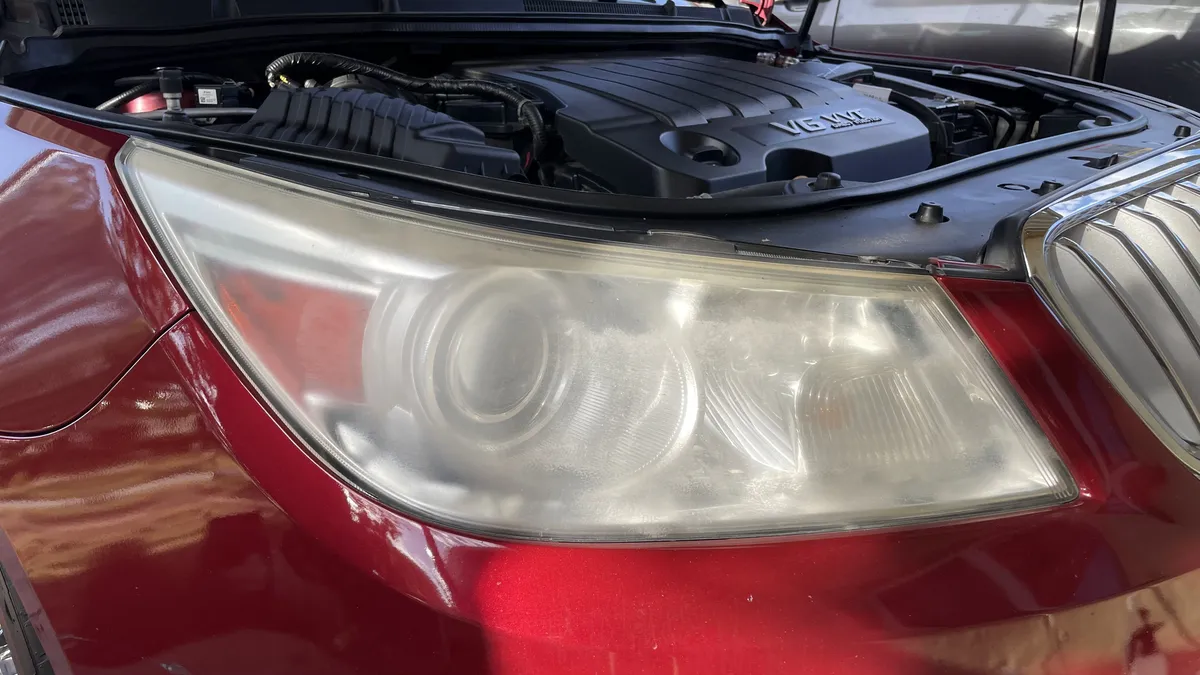
Oxidation and crazing are different
Oxidation is usually damaged exterior plastic or failed outer coating. Crazing looks more like fine cracking or stress marks in the lens and may be deeper than a normal restoration can remove.
The difference matters because oxidation may improve strongly while deep crazing may only improve around the damaged lines.
How to inspect it
Look at the lens dry, then from an angle. Crazing often appears when light crosses the plastic. Do not wet the lens before photos because water can hide texture and create unrealistic expectations.
If the marks appear behind the lens or are paired with droplets, the issue may not be exterior oxidation.
Crazing or oxidation decision filter
Use oxidation as the working theory when the lens looks yellow, chalky, dull, or rough on the outside and becomes clearer when wet.
Use crazing as the warning sign when fine lines remain visible at an angle, look embedded in the plastic, or do not disappear as the exterior haze improves.
In Arizona, a lens can have both: exterior sun damage plus deeper stress lines. That usually means restoration may help clarity but not erase every line.
Crazing next step
If the cloudiness is mostly exterior oxidation, restoration may be useful. If the lens has deep crazing, the result may be limited even after exterior haze improves.
Send angled photos before sanding so expectations are based on the depth of damage.
Common questions
Can headlight crazing be restored?
Sometimes surrounding haze can improve, but deep crazing may remain visible and can limit the final result.
How can I tell oxidation from crazing?
Oxidation often looks cloudy, yellow, or chalky on the surface. Crazing looks like fine lines, spiderweb cracking, or stress marks in the plastic.
Why do angled photos matter?
Angled photos reveal fine cracks, pitting, and internal haze that straight-on photos or wet lenses can hide.
Check before replacing assemblies
Before ordering parts, send dry photos if the visible issue may be exterior oxidation.
- Send dry daylight photos of both headlights.
- Add one front photo of the vehicle.
- Include year, make, model, and your general Tucson-area location.