Why Do My Headlights Look Clear When Wet but Cloudy When Dry?
Water can temporarily hide fine surface texture on oxidized headlight lenses. When the lens dries, the cloudy, yellow, or hazy plastic becomes visible again.
Published 2026-06-21. Modified 2026-06-21. Reading time: 5 min read. Publisher: Tucson Headlight Restoration.
The short answer
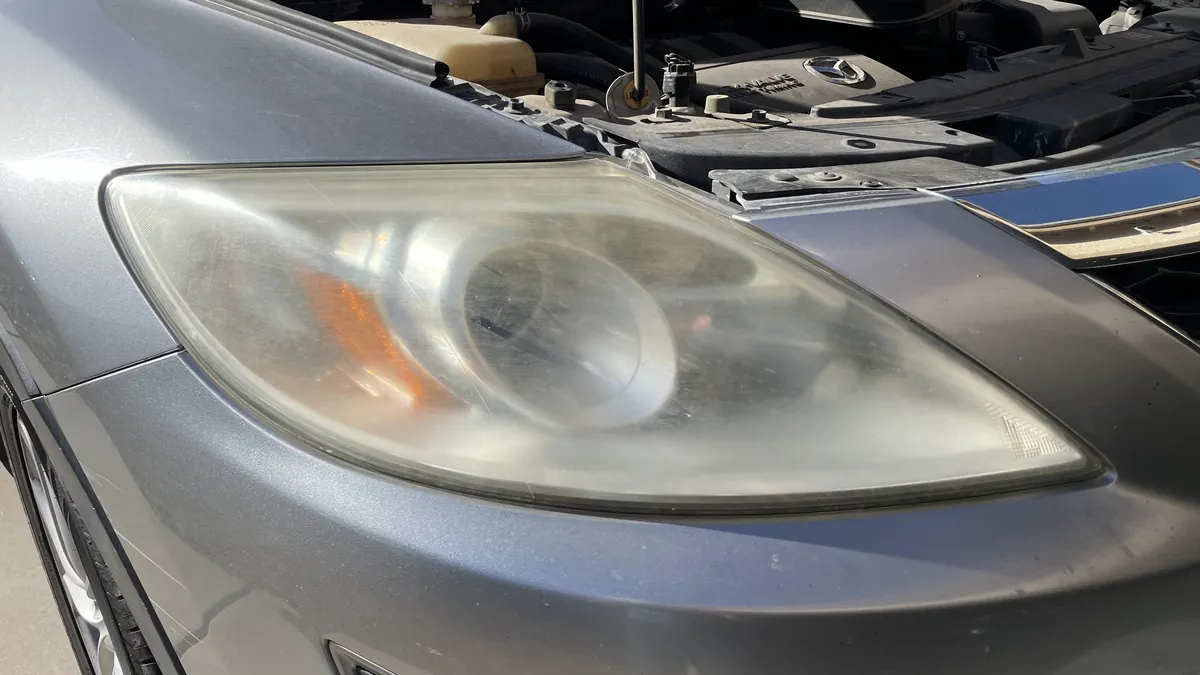
If your headlights look clear when wet but cloudy when dry, the most likely explanation is exterior surface oxidation, fine scratches, or failed outer coating on the plastic lens. Water temporarily fills tiny surface texture and changes how light scatters through the lens. When the water dries, the rough or oxidized surface shows again.
That wet-clear, dry-cloudy pattern is a useful clue, but it is not a complete diagnosis. The next step is to inspect the lens dry, look for cracks or moisture inside the housing, and send photos before buying another product or assuming the whole assembly needs replacement.
Why water makes cloudy headlights look clearer
Cloudy plastic scatters light because the outside surface is no longer smooth and protected. Oxidation, old coating failure, dust abrasion, washing marks, and age can leave microscopic texture across the lens. A dry rough surface reflects and scatters light in many directions, which makes the headlight look white, yellow, chalky, or hazy.
When the lens gets wet, water sits in some of those tiny scratches and low spots. For a short time, the surface looks smoother to your eye. The lens may appear glossier, darker, or clearer, especially in shade or after a car wash. That does not mean the oxidation is gone. It means the water is hiding part of the surface texture.
Why the cloudiness returns when the lens dries
Once the water evaporates, the surface returns to its real condition. If the outer plastic is oxidized or rough, the haze comes back. This is why a headlight can look better during a wash, then look cloudy again in the driveway a few minutes later.
The same effect can happen with quick shine products, oily wipes, or temporary coatings. They may create a wet-looking surface for a short time without correcting the damaged plastic underneath. A useful diagnosis should be based on the dry lens, not the best wet reflection.
| What you see | Likely meaning | Next step |
|---|---|---|
| Clearer while wet, cloudy when dry. | Exterior oxidation or fine surface texture. | Inspect dry and send photos for restoration review. |
| Cloudy after every wash. | Oxidation, residue, water spots, or wash-related stress. | Read the cloudy-after-car-wash guide and photograph the dry lens. |
| Fog, droplets, or haze behind the lens. | Possible internal moisture or seal issue. | Review repair or replacement, not exterior sanding alone. |
| Crack-like lines that stay visible wet or dry. | Possible crazing or deeper lens damage. | Compare with the crazing vs oxidation guide before sanding. |
When this points to exterior oxidation
The pattern often points to a restorable exterior problem when the headlight is intact, dry inside, and cloudy on the outer plastic. Other clues include a rough or chalky feel, yellow top edges, faded original coating, and haze that remains after gentle washing.
If those signs match your vehicle, professional headlight restoration in Tucson may be worth reviewing before replacement. Restoration focuses on the exterior lens surface with inspection, prep, controlled exterior correction when needed, final clarity check, and UV protection.
When it may be more than oxidation
Not every cloudy headlight is a restoration candidate. If you see droplets inside the housing, fog behind the lens after rain, cracked plastic, broken mounting tabs, burned reflectors, failed LEDs, or deep internal damage, exterior restoration cannot solve the whole problem.
Use the inside vs outside headlight oxidation guide if the haze looks trapped behind the lens. If the lens has deep crack-like patterns, compare the symptoms with the crazing guide before sanding or buying a kit.
Why Tucson makes the pattern common
Tucson and Southern Arizona are rough on plastic headlights. UV exposure, high heat, dry air, dust, monsoon residue, outdoor parking, and repeated washing all stress the factory protective layer. Once that layer weakens, the lens can oxidize and scatter light more noticeably when dry.
Dust can also hide the problem until the vehicle is washed. The headlight may look uniformly dirty before washing, clearer while wet, then cloudy again after the water dries and the oxidized plastic is easier to see.
What to do before buying a kit
Let the headlights dry completely. Take one close-up of each headlight, one angled photo of each lens, and one front photo of the vehicle. Include the year, make, model, and Tucson-area location if you want a quote.
Do not judge the lens while it is wet. Do not keep scrubbing a dry cloudy lens with harsh pads. The practical next step is to decide whether the problem is exterior oxidation, residue, internal moisture, crazing, or replacement-level damage.
If the lens looks like exterior oxidation, the mobile headlight restoration page explains how local service setup works. If you are comparing options, read headlight restoration vs replacement in Tucson before ordering assemblies.
Common questions
Why do my headlights look clear when wet but cloudy when dry?
Water temporarily fills fine surface scratches, oxidation, and rough texture on the plastic lens. When it dries, the damaged exterior surface scatters light again and the cloudy look returns.
Does clear when wet mean my headlights can be restored?
It often points to exterior oxidation, which may be a restoration candidate, but photos are still needed. Cracks, internal moisture, deep crazing, or broken assemblies may need repair or replacement instead.
Should I photograph headlights wet or dry for a quote?
Photograph them dry in daylight. Wet photos can hide oxidation and make the lens look better than it really is.
Can a DIY kit fix headlights that look clear when wet?
Sometimes, if the oxidation is mild and the lens is intact. Rough yellow lenses, old coating failure, prior kit damage, or expensive assemblies are better reviewed before buying a kit.
Not sure if it is oxidation or moisture?
Text photos first. Dry close-ups and angled photos usually show whether the haze is on the outside lens or inside the assembly.
- Send dry daylight photos of both headlights.
- Add one front photo of the vehicle.
- Include year, make, model, and your general Tucson-area location.