When Headlight Restoration Is Not Enough: Signs You May Need Replacement
Headlight restoration works for many cloudy lenses, but not every headlight can be restored. Learn the signs that replacement may be needed.
Published 2026-06-02. Modified 2026-06-02. Publisher: Alex Martinez.
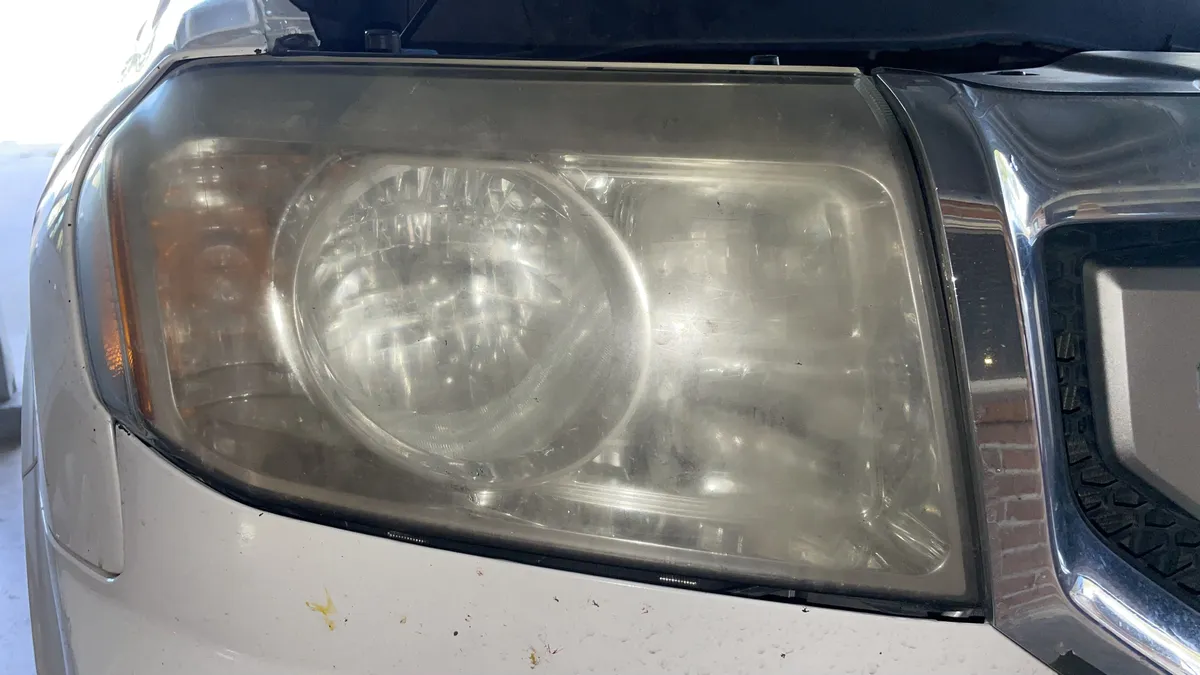
Restoration is powerful, but it has limits
Headlight restoration can make many cloudy, yellow, or oxidized headlights look much clearer. But it is not magic, and it is not the right answer for every headlight.
The best restoration candidates have external lens oxidation. That means the damage is on the outside surface of the plastic. If the problem is inside the assembly, structural, electrical, or related to the bulb or reflector, restoration may improve appearance but not fully solve the issue.
A professional answer should include both possibilities. See the restoration vs replacement guide for a broader comparison.
Sign 1: Water or condensation inside the headlight
If you see fog, droplets, standing water, or moisture behind the lens, the problem is likely inside the assembly. That usually means the seal, vent, housing, or lens bond may be compromised.
Restoring the outside surface does not remove trapped moisture. It may make the lens clearer, but the water problem can remain.
Sign 2: Cracks in the lens
Small surface scratches can often be reduced, but cracks are different. A cracked lens can allow moisture and dust to enter the assembly. It can also spread over time.
If the lens is cracked through the plastic, replacement may be the more realistic long term solution.
Sign 3: Broken mounting tabs or housing damage
The headlight lens is only one part of the assembly. If the housing is loose, broken, misaligned, or missing mounting tabs, restoration will not fix fitment. A clear lens does not help if the headlight is not aimed or mounted correctly.
Sign 4: Burned reflector or projector damage
Some headlights look dim not because the outside lens is cloudy, but because internal reflective surfaces or projector bowls are burned, aged, or failing. This is more common on certain older vehicles or vehicles with heat related internal wear.
If the lens is clear but light output is still poor, the issue may be inside.
Sign 5: Bad bulb, wiring, or electrical issue
A yellow or dim headlight is not always a lens problem. It could be a weak bulb, incorrect bulb, failing ballast, bad ground, wiring issue, or poor headlight aim.
If one side is much dimmer than the other, or if the light flickers, cuts out, or has an unusual color, restoration may not be the first fix.
Sign 6: Severe pitting or deep surface damage
Arizona roads, dust, debris, and years of sun exposure can leave lenses pitted. Restoration can improve clarity, but deep pitting may not disappear completely.
This does not always mean replacement is required. It means expectations should be realistic.
How a photo review helps
Good photos can usually show:
1. External oxidation
2. Yellowing
3. Peeling coating
4. Cracks
5. Moisture
6. Uneven damage
7. Difference between left and right headlights
Photos cannot diagnose every internal or electrical problem, but they can help decide whether restoration is a reasonable first step.
Final recommendation
Restoration is often the right choice for cloudy, yellow, or oxidized headlights. Replacement becomes more likely when there are cracks, water inside, housing damage, electrical problems, or internal component failure.
Send clear photos before booking so you can get an honest opinion on whether restoration is a good fit.
Ready to see if your headlights can be restored?
Send clear photos of both headlights and include your vehicle details. Tucson Headlight Restoration will review the lens condition before scheduling mobile service.

Common questions
Can restoration fix moisture inside headlights?
No. Restoration improves the outside lens surface. Moisture inside the assembly usually requires diagnosis of the seal, vent, housing, or replacement.
Can cracked headlights be restored?
The surrounding haze may improve, but a crack itself will usually remain. A cracked lens may need replacement.
Can restoration fix dim bulbs?
No. If the bulb, wiring, ballast, or internal reflector is the problem, restoration alone will not fix it.
How do I know if I need replacement?
Replacement may be needed if there is water inside, cracks, broken tabs, internal damage, or electrical issues.
Get a quote in 30 seconds
Send clear photos of both headlights before buying a kit or replacing the assemblies. Tucson Headlight Restoration will review the lens condition before scheduling mobile service.
- Take two clear photos of your headlights.
- Text them to 520-254-7620.
- Include year, make, model, and service area.
- Get a clear recommendation before buying a kit or replacing the headlights.