Sun Damaged Headlights in Arizona: Why Tucson Burns Through Clear Plastic Lenses
Tucson is hard on plastic headlight lenses. This guide explains how Arizona sun damage starts, what it looks like, and when restoration can help.
Published 2026-06-02. Modified 2026-06-02. Publisher: Alex Martinez.
Overview
If your headlights looked clear a few years ago and now look yellow, cloudy, chalky, or faded, you are not imagining it. Tucson is one of the toughest places in the country for exterior plastic on a vehicle. The same conditions that fade paint, dry out trim, and make windshield wipers crack can also break down the clear outer layer of a headlight lens.
Most modern headlights are not made of glass. They are usually polycarbonate plastic with a protective factory coating. That plastic is strong, lightweight, and impact resistant, but it needs protection from sunlight. Once the original coating breaks down, the lens surface starts to oxidize. That is when headlights begin to look dull, yellow, or milky.
For Tucson drivers, this matters because headlights are not just cosmetic. A cloudy lens can scatter light before it reaches the road. If the damage is still mostly on the outside surface, professional headlight restoration in Tucson may be able to improve clarity, appearance, and nighttime visibility without replacing the whole assembly.
Why Arizona is especially hard on headlights
Tucson has more than 350 days of sunshine a year, hot summers, dry air, and long stretches of outdoor parking. A car that sits in a driveway, apartment lot, work parking lot, or uncovered street space gets repeated exposure to sunlight from morning to evening. That constant cycle matters.
Headlight damage is not usually caused by one hot day. It is caused by repetition. Sun, heat, dust, washing, and road grime work together over time. The outer coating slowly weakens. Tiny surface defects form. Dust and minerals cling to those defects. Washing removes some dirt, but it can also abrade the already weakened surface if harsh brushes or dirty towels are used.
In a milder climate, the same lens may stay clear longer. In Southern Arizona, the degradation often appears earlier because the vehicle sees more intense sunlight and more heat cycles.
What sun damaged headlights look like
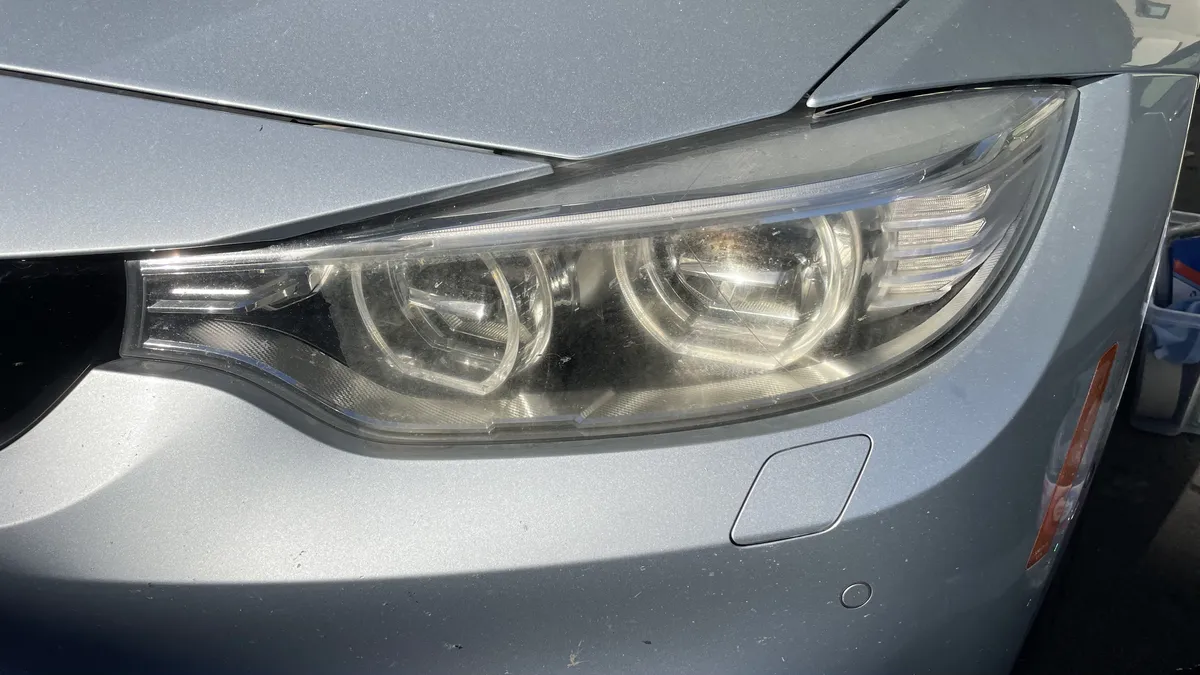
Sun damage does not always appear the same way. Some headlights turn yellow. Others look white, foggy, or cloudy. Some develop a chalky surface that feels rough when you run a finger across it. Others look clear in the shade but hazy when direct sunlight hits them.
Common signs include:
1. Yellowing across the top or outer edge of the lens.
2. White haze that makes the lens look frosted.
3. Rough texture on the outside surface.
4. Light output that looks scattered instead of sharp.
5. One headlight aging faster than the other because of parking direction.
6. A clean car that still looks older because the headlights look dull.
If the haze is on the outer surface, restoration is usually worth evaluating. If the problem is deep cracking, heavy internal moisture, broken tabs, damaged wiring, or a failing projector, replacement or repair may be needed instead. For a more specific diagnosis, see the guide to oxidized headlights in Tucson.
Why the top of the lens often fails first
Many Tucson vehicles show the worst damage along the top half of the headlight. That is because the upper lens surface often receives the most direct sun. It is also exposed to more heat from the hood area and more airborne dust that settles on horizontal or angled surfaces.
The top edge can start to look yellow or rough while the bottom part still looks fairly clear. This is an early warning sign. Waiting until the entire headlight turns opaque usually makes the restoration more aggressive and may limit how much clarity can be recovered.
Is sun damage only cosmetic?
No. A dull headlight changes how light travels through the lens. Instead of passing through a clear surface and projecting forward, light can scatter inside the damaged outer layer. The result may be less useful light on the road and more glare close to the vehicle.
The Insurance Institute for Highway Safety (IIHS) has emphasized that headlight visibility varies widely and that better rated headlights are associated with fewer nighttime crashes. The NHTSA has also noted that dirty or damaged headlamps can reduce forward visibility and alter light distribution. For a Tucson driver, especially on darker roads outside the city center, lens clarity is part of the vehicle safety picture.
That does not mean restoration magically turns every older headlight into a new headlight system. Bulbs, aim, reflector condition, projector condition, and lens design also matter. But lens clarity is one of the most visible and correctable parts of the system.
Can sun damaged headlights be restored?
Often, yes, if the damage is mostly external oxidation. A proper restoration process removes the failed outer layer, refines the surface, polishes the lens, and applies protection so the clear finish is not immediately exposed again.
The key is not just making the lens shiny for a photo. The key is removing oxidation evenly and protecting the lens afterward. A quick polish may look better for a short time, but if the surface is not properly corrected and protected, the haze can return faster.
A professional evaluation should consider:
1. Whether the haze is outside or inside.
2. How deep the oxidation is.
3. Whether there are cracks or crazing in the plastic.
4. Whether the headlight has moisture inside.
5. Whether the lens has already been restored aggressively before.
6. Whether the customer wants clarity, appearance, safety, or all three.
If you are comparing options, read the headlight restoration cost in Tucson guide before deciding.
Why protection matters after restoration
Restoration removes damaged material. Protection helps slow the next round of sun damage. In Arizona, this step is not optional if you want the result to last. The restored lens needs a UV protective layer and careful curing time.
After restoration, avoid washing the vehicle too soon. Avoid touching the lens. Avoid automatic brush washes during the early curing period. Park in shade when possible. These small habits make a bigger difference in Tucson than they might in a cooler, cloudier city.
For a detailed aftercare plan, see how to keep headlights clear after restoration in Arizona.
When to request a photo quote
You should request a quote when your headlights look yellow, cloudy, chalky, or rough but the housing is not broken. Good photos can usually show whether restoration is a strong option.
Take photos in daylight from three angles:
1. Straight in front of each headlight.
2. A close photo of the worst haze or yellowing.
3. A photo with the headlights turned on against a wall or garage door if nighttime visibility is the concern.
Tucson Headlight Restoration can review the photos and explain whether restoration is likely to help or whether replacement should be considered.
Next step
If your headlights are fading from Arizona sun exposure, request a photo quote for mobile headlight restoration in Tucson. Send clear photos of both headlights and include your general area in Tucson, Oro Valley, Marana, or Vail.
Ready to see if your headlights can be restored?
Send clear photos of both headlights and include your vehicle details. Tucson Headlight Restoration will review the lens condition before scheduling mobile service.

Common questions
Can Arizona sun damage headlights beyond normal restoration?
Yes, severe sun exposure can damage plastic lenses deeply if the material is cracked, crazed, or burned. Surface oxidation is often restorable, but deep structural damage may not fully clear.
Why do headlights turn yellow in Tucson?
Most yellowing comes from oxidation of the outer plastic and breakdown of the factory protective coating. Tucson sun, heat, dust, and outdoor parking can speed up that process.
Is headlight restoration better than replacing sun damaged headlights?
It depends on the damage. If the lens is mainly oxidized on the outside, restoration can be a practical option. If the housing is broken, leaking, or damaged internally, replacement may be better.
How can I slow down sun damage after restoration?
Use UV protection, follow curing instructions, avoid early washing, park in shade when possible, and stay away from harsh automatic brush washes.
Get a quote in 30 seconds
Send clear photos of both headlights before buying a kit or replacing the assemblies. Tucson Headlight Restoration will review the lens condition before scheduling mobile service.
- Take two clear photos of your headlights.
- Text them to 520-254-7620.
- Include year, make, model, and service area.
- Get a clear recommendation before buying a kit or replacing the headlights.