Can You Restore Headlights After a DIY Kit Went Wrong?
Sanded your headlights wrong or got a bad DIY result? Learn when failed DIY headlight restoration can still be corrected in Tucson.
Published 2026-06-07. Modified 2026-06-07. Publisher: Alex Martinez.
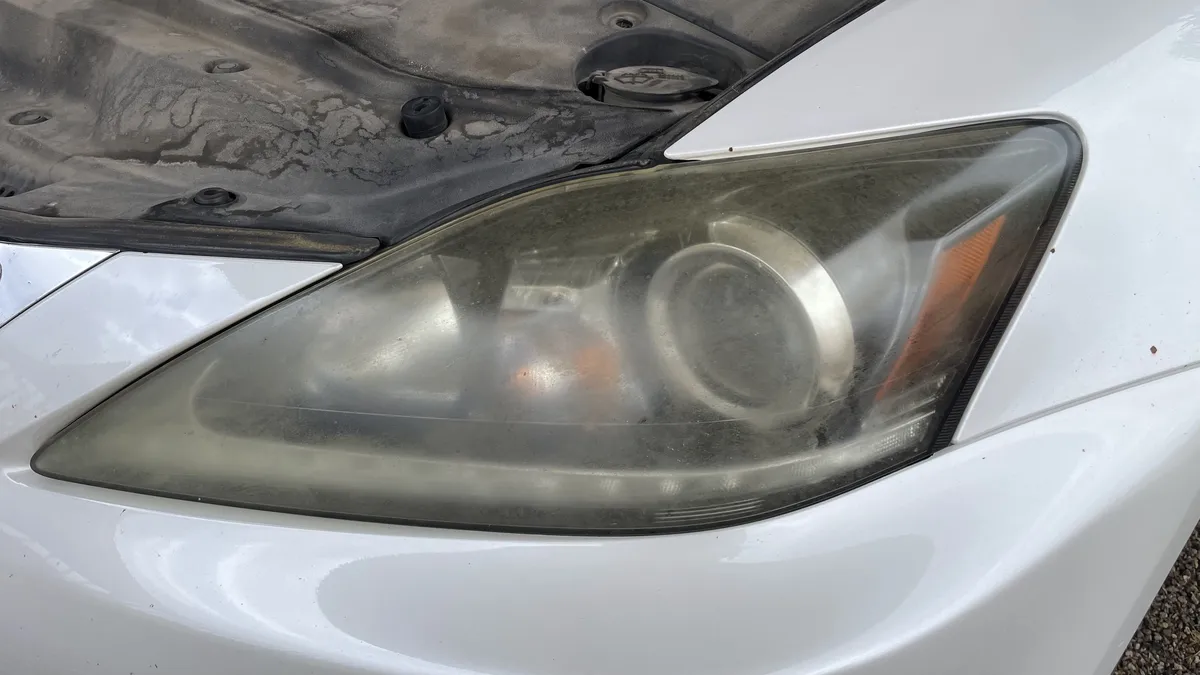
What a bad DIY result usually looks like
A DIY headlight restoration kit can look like an easy win until the lens ends up worse than it started.
Maybe the haze came back after a few weeks. Maybe the finish looks patchy. Maybe one spot is clear and another still looks milky. Maybe the lens now has sanding marks, streaks, or a dull look that stands out in direct Tucson sunlight.
If that sounds familiar, you are not the only one. A lot of failed DIY jobs are not complete disasters, but they do need a careful evaluation before you keep sanding and make the lens harder to recover.
Most failed DIY headlight restoration attempts fall into a few common patterns.
The first is temporary improvement followed by fast re-fogging. The headlights may look better right after the kit, but the cloudy look comes back quickly. This usually happens when the lens was polished but not corrected evenly, or when the protective step was weak or skipped.
The second is uneven clarity. One section looks better while another still looks cloudy, yellow, or scratched. That often comes from inconsistent sanding pressure, skipped grit steps, or incomplete oxidation removal.
The third is visible sanding marks or dullness. In this case, the lens may technically be cleaner than before, but the surface no longer looks clear because the finish was not refined enough before polishing or coating.
Why DIY kits fail in Tucson
DIY kits can work on some lightly hazed headlights, but Tucson is a tough place for weak restoration work. Arizona sun, heat, dust, monsoon residue, and frequent car washes expose shortcuts quickly.
A kit may fail because the damaged outer layer was not fully removed. It may also fail because the sanding marks were not refined properly. Sometimes the lens looks better while wet or freshly coated, but once the product dries or wears off, the haze returns.
Another common problem is applying a wipe-on coating over a surface that was not ready. Protection only works well when the lens underneath is properly corrected, clean, dry, and evenly prepared.
For a broader comparison before trying another product, see the guide on DIY headlight restoration kits in Tucson.
Can a failed DIY attempt still be corrected?
In many cases, yes.
If the damage is still mostly surface-level, a failed kit job can often be corrected with a more even process and better finishing steps. The important question is whether the problem is still external lens correction or whether the plastic has been overworked to the point where the final result will be limited.
That is why a failed DIY job should not automatically push you into buying a whole new headlight assembly. But it also should not automatically lead to more random sanding at home.
Before trying another kit, it is usually smarter to send photos and ask whether professional headlight restoration in Tucson is still a realistic option.
Signs the headlight may still be a good restoration candidate
A lens may still be restorable if the haze looks mostly on the outer surface, the headlight is cloudy but not deeply cracked, the sanding marks are visible but not extremely deep, and there is no major internal moisture or housing damage.
It is also a better sign if the headlight still becomes clearer when wet. That often means the problem is related to the outer surface texture rather than a lasting internal issue.
If the issue is mostly poor finishing, incomplete correction, or weak protection, there may still be a realistic path forward.
When a DIY attempt may have gone too far
There are also cases where expectations need to stay honest.
If the lens now shows deep sanding scars, fine cracking, severe edge wear, or an uneven shape from aggressive sanding, the result may be limited even if the headlight still improves.
If the haze is inside the housing, or the lens has heavy crazing through the plastic, the conversation shifts closer to replacement territory. In that case, review the headlight restoration vs replacement guide before spending more money.
The biggest mistake after a bad DIY job
The most common mistake is trying another random shortcut right away.
Drivers often move from one kit to another, switch compounds, use household products, or keep sanding different spots without a clear plan. That usually makes the lens more inconsistent and can reduce how much clean correction remains.
A better next step is to pause, clean the lens gently, let it dry, and review the condition honestly in daylight.
What photos to send for a rescue evaluation
For a realistic review, send clear daylight photos of both headlights.
Include:
1. One straight-on front photo of both headlights
2. One close-up of the worst areas
3. One angled photo in direct daylight
4. One photo of any cracks, moisture, or peeling
5. A short note explaining which kit or products you already used
That last part matters. If a sanding kit, wipe-on coating, polishing compound, clear coat, or household product was already used, it changes what the correction process may need to look like.
If your location and lens condition are a good fit, mobile headlight restoration in Tucson may be a practical way to have the failed DIY result reviewed without taking the vehicle to a shop.
Why this is worth checking before replacement
Headlight assemblies can be expensive, especially on newer vehicles. If the issue is still mostly on the outer lens, restoration may be a more practical first step than replacing the full assembly.
But if the lens is already deeply damaged or the housing has internal problems, replacement may be the more honest recommendation.
The goal is not to promise a miracle. The goal is to find out whether the headlights still have enough restorable surface condition to make professional correction worth it.
Conclusion
Yes, a bad DIY headlight kit result can often still be improved, but not every failed attempt should be treated the same.
Some lenses only need a more even correction and protection plan. Others are already moving into limited-result territory. The right move is to stop experimenting and get an honest review first.
Send clear photos of both headlights for a Tucson mobile headlight restoration quote and honest condition review.
Ready to see if your headlights can be restored?
Send clear photos of both headlights and include your vehicle details. Tucson Headlight Restoration will review the lens condition before scheduling mobile service.
Related hub
For the broader decision path, see the professional vs DIY headlight restoration guide.

Common questions
Can cloudy headlights get worse after a DIY kit?
Yes. Uneven sanding, rushed polishing, or weak finishing steps can leave the lens looking duller or patchier than before.
Do failed DIY headlights always need replacement?
No. Many still have surface-level damage that may be improved with a better process.
Should I try another kit first?
Usually not. Repeating random DIY attempts can make the surface more inconsistent and harder to recover.
What if only one headlight came out bad?
That can happen. Different starting condition, pressure, and coverage can produce different results side to side.
Can mobile restoration help after a DIY mistake?
Often, yes, if the damage is mostly external and the lens has not been over-sanded or deeply cracked.
Get a quote in 30 seconds
Send clear photos of both headlights before buying a kit or replacing the assemblies. Tucson Headlight Restoration will review the lens condition before scheduling mobile service.
- Take two clear photos of your headlights.
- Text them to 520-254-7620.
- Include year, make, model, and service area.
- Get a clear recommendation before buying a kit or replacing the headlights.