Are Yellow Headlights the Same as Dim Headlight Bulbs?
Yellow headlights and dim bulbs are not always the same problem. Learn how to tell lens oxidation from bulb, wiring, and internal headlight issues.
Published 2026-06-02. Modified 2026-06-02. Publisher: Alex Martinez.
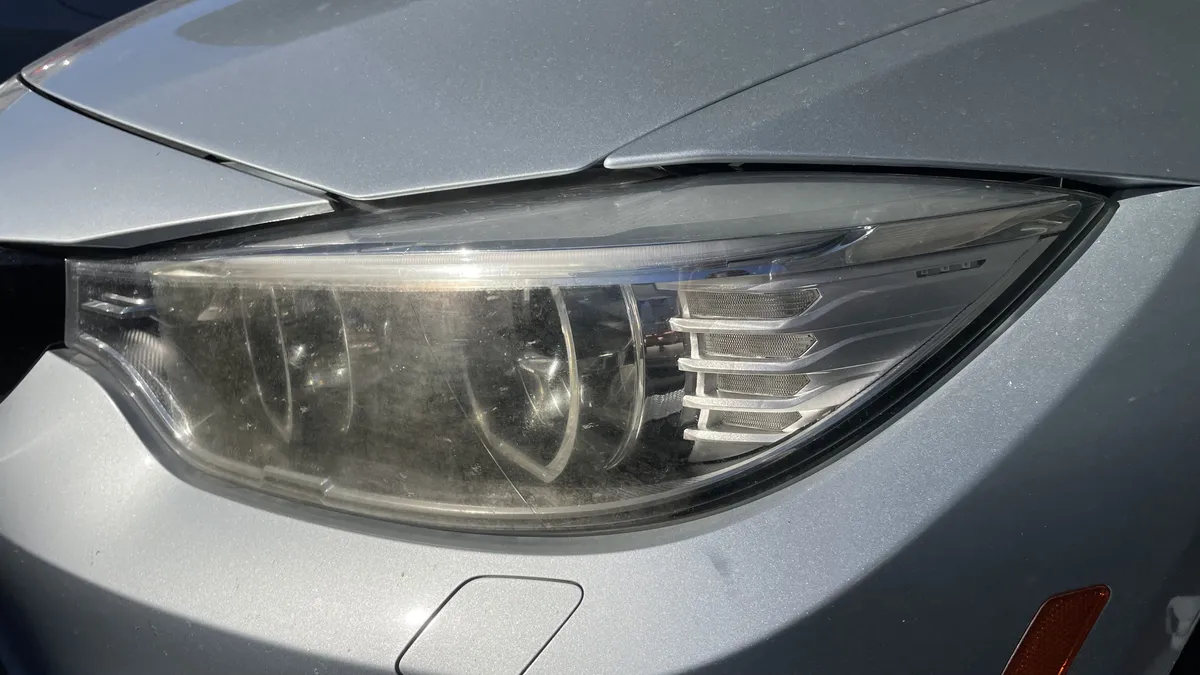
Two different problems can look similar
Many drivers describe their headlights as yellow, weak, dim, cloudy, or not bright enough. Those words often get mixed together, but they can point to different problems.
A yellow headlight lens is usually a plastic oxidation problem. A dim bulb is usually a lighting output problem. Sometimes both are happening at the same time.
Understanding the difference helps you avoid paying for the wrong fix.
What yellow headlights usually mean
Yellow headlights usually mean the outer plastic lens has oxidized. The original protective layer has broken down, and the lens surface has become discolored.
Signs of yellow lens oxidation include:
1. The headlight looks yellow even when the lights are off
2. Both headlights may have similar discoloration
3. The lens may feel rough or chalky
4. The beam looks scattered at night
5. Washing does not remove the yellow color
6. The plastic looks aged in daylight
This is the kind of problem that headlight restoration in Tucson is designed to address.
What dim bulbs usually mean
Dim bulbs can happen even when the lens is clear. A bulb may be old, weak, incorrect, poorly installed, or affected by electrical issues.
Signs of a bulb or electrical issue include:
1. One headlight is much dimmer than the other
2. One bulb has a different color than the other
3. The light flickers
4. The light cuts in and out
5. The beam pattern looks wrong
6. The lens is clear but output is still poor
Restoration will not fix a weak bulb or wiring issue.
What if the lens is yellow and the bulb is weak?
This happens often. An older vehicle may have oxidized lenses and aging bulbs. Replacing the bulb may improve output, but the yellow lens can still block or scatter light. Restoring the lens may improve clarity, but a weak bulb may still limit brightness.
The best approach is to identify both problems instead of guessing.
Quick daylight test
Look at the vehicle during the day with the headlights off.
If the lenses look yellow, cloudy, or hazy without the lights on, lens oxidation is likely part of the problem.
If the lenses look clear but the lights are weak at night, the issue may be bulb, aim, wiring, or internal headlight performance.
Quick nighttime test
At night, park facing a flat wall or garage door. Turn on the headlights.
Look for:
1. Uneven brightness between sides
2. Scattered light instead of a defined beam
3. Yellow or brown color through the lens
4. Flickering
5. Weak beam despite clear lens
This test is not a full diagnosis, but it helps separate lens haze from electrical or bulb problems.
Why this matters for safety
Cloudy or yellowed lenses can reduce usable light on the road. A AAA study has reported that clouded or yellowed headlights can produce much less light than new headlights. Research by the IIHS also shows that better headlight visibility ratings are associated with lower nighttime crash rates.
For Tucson drivers, that matters on dark neighborhood roads, desert roads, monsoon evenings, and dusty conditions.
Final recommendation
Yellow headlights and dim bulbs are not the same thing. If the plastic lens is yellow, cloudy, or rough, restoration may help. If the bulb is weak, flickering, or mismatched, bulb or electrical service may be needed.
Send photos with the lights off and on so the lens condition can be reviewed before deciding what to fix.
Ready to see if your headlights can be restored?
Send clear photos of both headlights and include your vehicle details. Tucson Headlight Restoration will review the lens condition before scheduling mobile service.

Common questions
Can yellow headlights be caused by bad bulbs?
Usually no. Yellow lens discoloration is often caused by oxidation of the plastic lens. Bad bulbs affect light output, not the color of the lens surface.
Can restoration make dim headlights brighter?
It can improve light transmission if the lens is cloudy or oxidized, but it will not fix weak bulbs, wiring problems, or internal reflector issues.
Should I replace bulbs before restoring headlights?
Not always. If the lens is visibly yellow or cloudy, restoration may be needed regardless of bulb condition.
Why is only one headlight dim?
One dim headlight may point to a bulb, wiring, alignment, or internal issue. It can also happen if one lens is more oxidized than the other.
Get a quote in 30 seconds
Send clear photos of both headlights before buying a kit or replacing the assemblies. Tucson Headlight Restoration will review the lens condition before scheduling mobile service.
- Take two clear photos of your headlights.
- Text them to 520-254-7620.
- Include year, make, model, and service area.
- Get a clear recommendation before buying a kit or replacing the headlights.