Headlight Restoration vs Replacement: What Tucson Drivers Should Know
Restoration is often the smart first move for exterior oxidation, but cracked lenses, internal moisture, and broken housings usually call for replacement.
Published 2026-06-02. Modified 2026-06-02. Publisher: Alex Martinez.
Fast recommendation
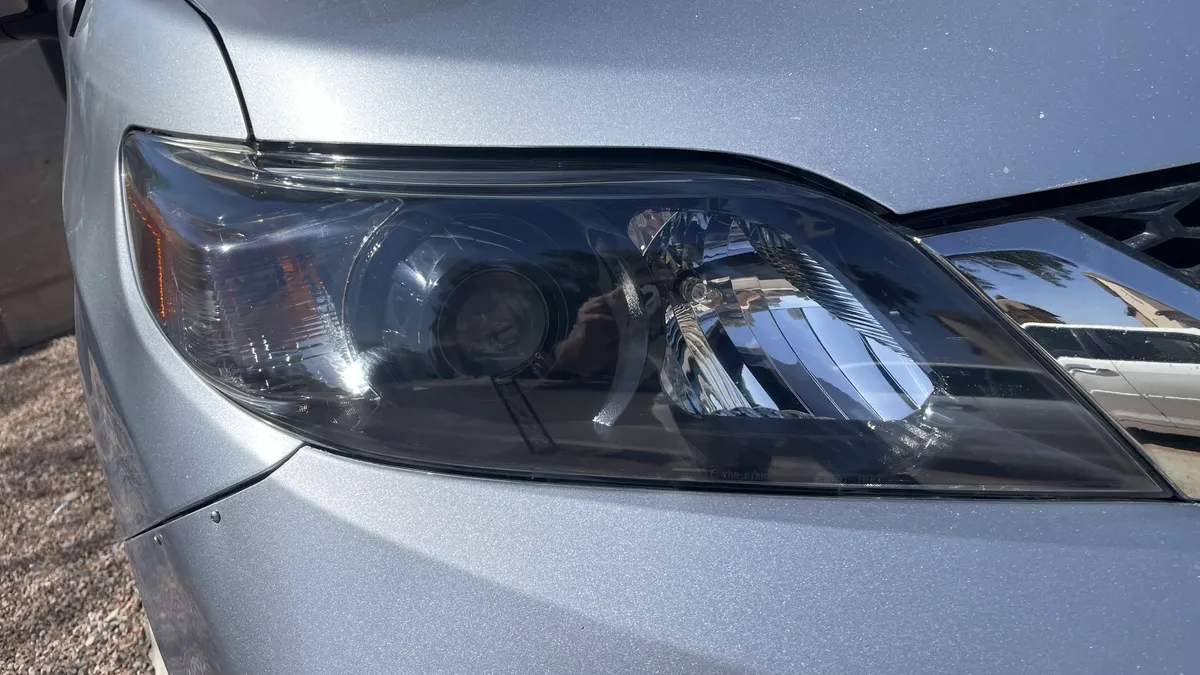
For Tucson drivers, headlight restoration is often the best first option when the lens is cloudy, yellow, hazy, or oxidized on the outside but the headlight assembly is still intact. Replacement is usually the better choice when the headlight is cracked, has internal moisture, broken mounting tabs, electrical damage, a burned reflector, or damage inside the assembly.
The key question is simple: is the problem on the outside surface of the lens, or is the headlight assembly itself failing? Exterior oxidation can often be corrected. Structural or internal damage usually cannot.
Ready to see if your headlights can be restored?
Send clear photos of both headlights and include your vehicle details. Tucson Headlight Restoration will review the lens condition before scheduling mobile service.
When restoration makes sense
Restoration makes sense when the lens looks cloudy even after washing. It also makes sense when the headlight is yellow, chalky, lightly rough, dull, or covered with a failed exterior coating. In these cases, the plastic lens surface is usually the problem.
Professional restoration is designed to correct that surface. The process removes oxidation, refines the plastic, polishes clarity back into the lens, and adds UV protection. This is different from simply wiping a product over the lens and hoping the shine lasts.
Restoration is also convenient when the vehicle is otherwise in good shape and the owner wants to improve appearance before selling it, driving at night, or avoiding a large parts purchase. For many vehicles, keeping the original headlight assembly is preferable when the housing still fits well and does not leak.
Mobile restoration adds another advantage: the vehicle can stay at the customer's location. That matters for drivers who cannot leave a car at a shop, parents juggling school pickups, fleet owners, or anyone who simply wants the work done in a practical parking space.
When replacement is better
Replacement is better when the headlight has problems restoration cannot reach. Cracks are a clear example. A cracked lens can let moisture in, and polishing the outside will not seal the assembly. Internal condensation is another warning sign because it may point to a failed seal or damaged housing.
Broken tabs, damaged wiring, failed internal reflectors, melted areas, and cloudy material inside the assembly are also replacement indicators. In those cases, the exterior lens may look better after polishing, but the root problem remains.
There are also cosmetic reasons to replace headlights. Some drivers want brand new assemblies or a different style. That is valid, but aftermarket fit and sealing quality can vary. OEM assemblies can be excellent, but they are usually more involved than restoring an intact lens.
If a vehicle has advanced driver assistance features, unusual headlight assemblies, or expensive lighting modules, replacement decisions may also involve calibration, part quality, or installation complexity. Restoration avoids those concerns when the lens is the only problem.
DIY kits vs professional restoration
DIY kits can be useful for light haze if the owner follows directions carefully. The challenge is consistency. Sanding too little leaves oxidation behind. Sanding unevenly can create visible marks. Skipping protection can allow the lens to haze again quickly in Tucson sun.
Some kits are mostly wipe-on products. They may improve gloss briefly, especially in photos, but they often do not remove deeper oxidation or failed coating. Tucson heat and UV exposure can expose weak prep fast.
Professional restoration is valuable when the lenses are heavily yellowed, the coating is peeling, or the customer wants a cleaner result without trial and error. The mobile option also saves the time of dropping off the vehicle.
Cost and convenience considerations
This site does not currently publish a confirmed fixed price for every headlight condition. That is sensible because lens severity varies. A light haze job and a severe peeling coating job should not be treated like the same project.
Replacement cost depends on the vehicle, whether the parts are OEM or aftermarket, and whether labor is needed. Restoration is often more affordable than buying complete assemblies, but the honest answer is to compare the actual lens condition and vehicle parts cost.
There is also a time cost. Finding the right assembly, waiting for parts, scheduling installation, and checking fit can take longer than a mobile restoration appointment when the existing lens is a good candidate. That convenience is one reason many Tucson drivers ask about restoration before committing to replacement.
What photos help the decision
Take photos in daylight with the headlights turned off. Stand close enough to show the lens texture, then take one wider photo that shows both headlights and the front of the vehicle. If you see peeling, cracks, water droplets, or a cloudy film inside the housing, include a close-up of that area.
These photos help separate a restoration candidate from a replacement candidate. They also make the conversation more useful because the recommendation is based on the actual vehicle rather than a generic answer.
How Tucson drivers should decide
Start with photos. Take one clear photo of each headlight in daylight, plus a front photo of the vehicle if possible. Look for cracks, water, broken parts, or haze that appears inside the lens. If the headlights are intact and the problem appears exterior, restoration is usually worth considering first.
If the headlights have internal moisture or physical damage, ask about replacement options. Professional restoration should be honest about limitations. A good service does not need to promise impossible results to be valuable.
For cloudy, oxidized, sun-damaged Tucson headlights, restoration can be a practical, convenient, and appearance-focused solution. For broken assemblies, replacement is the responsible path.
The honest middle ground is to inspect first and choose the least invasive option that actually solves the problem. That approach keeps the recommendation useful for the customer instead of forcing every headlight into the same answer.
Ready to see if your headlights can be restored?
Send clear photos of both headlights and include your vehicle details. Tucson Headlight Restoration will review the lens condition before scheduling mobile service.

Common questions
Should I restore or replace my headlights?
Restore intact headlights with exterior haze or oxidation. Replace headlights with cracks, internal moisture, broken tabs, wiring issues, or internal damage.
Are DIY kits worth it?
DIY kits can help light haze, but heavy Tucson oxidation usually needs more careful sanding, polishing, and UV protection.
Get a quote in 30 seconds
Send clear photos of both headlights before buying a kit or replacing the assemblies. Tucson Headlight Restoration will review the lens condition before scheduling mobile service.
- Take two clear photos of your headlights.
- Text them to 520-254-7620.
- Include year, make, model, and service area.
- Get a clear recommendation before buying a kit or replacing the headlights.